

Why Social Skills Cannot Be Taught in Isolation: The Power of Group Therapy for Children
- Jerlyn Tong

- Feb 27
- 3 min read

Why Children Who Do Well One-to-One Often Struggle with Peers?
“Why does my child communicate well with adults, yet struggle so much with other children?” This is one of the most common concerns parents share.
Many children speak confidently with adults. They may have strong vocabulary, good understanding, and solid academic skills. When an adult guides the interaction, they can stay organised, respond appropriately, and express themselves clearly.
But place the same child in a group of peers - during recess, group work, birthday parties, or family gatherings - and everything can feel harder. Conversations move quickly. Rules are unspoken. Emotions shift. Expectations change moment to moment.
Parents often notice things like interrupting, becoming upset during games, sounding blunt, withdrawing, or not knowing how to join in play. This doesn’t mean the child lacks social skills. It means peer interaction places very different demands on the brain than adult interaction.
In this blog:
Social Skills Are More Than Manners
Being socially successful is not just about saying the right words. Children must constantly figure out what others might be thinking, adjust their behaviour, manage feelings, and keep track of what is happening in the group - all at the same time.
These abilities develop gradually and mostly through experience with other children. They cannot fully grow through explanation alone.
Why Group Therapy Helps
In individual therapy, children can learn about social concepts. In group therapy, they get to practise them with real peers while therapists guide and support the interaction.
Children experience situations that naturally occur in social life - taking turns, negotiating, losing, disagreeing, repairing mistakes, and adapting when things do not go as expected.
Instead of talking about frustration, they learn to manage it in the moment. Instead of being told what to do, they try, adjust, and try again with support. This real-time practice is what helps social understanding become usable in everyday life.
The Hidden Role of Regulation and Thinking Skills
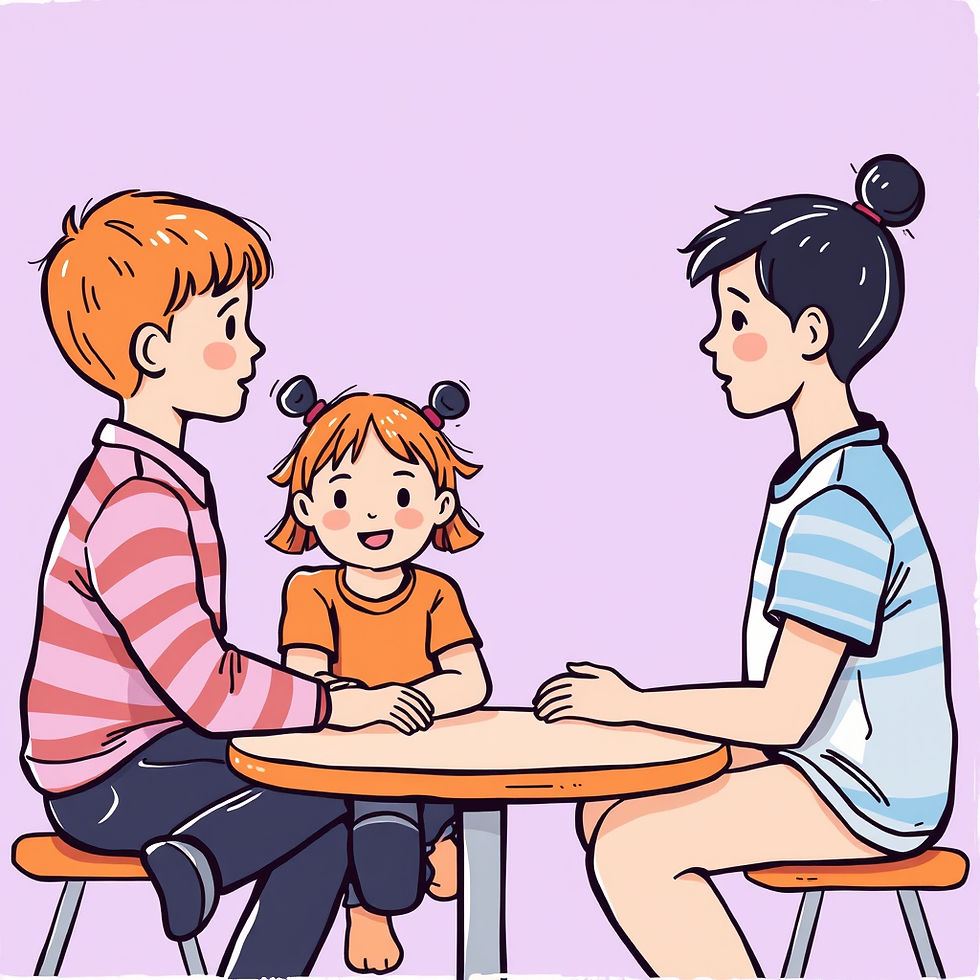
Successful peer interaction also relies heavily on regulation and executive functioning. Children must pause before speaking, wait, shift plans, organise thoughts, and monitor their behaviour while also paying attention to others.
Group sessions naturally strengthen these skills because children are working within shared activities that require cooperation and flexibility. As these abilities improve, children often cope better not only socially but also in classroom learning and teamwork.
Who Social Groups Often Help
Social skills groups are particularly helpful for children who:
Group therapy is not about labelling. It is about giving children the experience and support they need to participate more comfortably with peers.
The Bigger Picture
Social competence shapes far more than friendships. It supports confidence, emotional well-being, collaboration, and resilience across school years and beyond. When children strengthen these skills early, many later challenges become easier to navigate.
Considering Support
If your child communicates comfortably with adults but struggles with peers, you are not alone - and this pattern is very common. Social skills group therapy often provides the bridge between knowing and doing.
If you would like to explore whether group sessions may suit your child, we would be happy to speak with you and share information about upcoming intakes.
At Total Communication, our therapists can help you understand what may be affecting your child’s social participation and whether group support would be beneficial.
Connect with us to explore the right support
Call/WhatsApp: +65 9115 8895
Fill out the reachout form: https://www.totalcommunication.com.sg/contact

Jerlyn Tong
Jerlyn Tong is an Educational Therapist at Total Communication. She holds a Bachelor (Honours) degree in Linguistics and Multilingual Studies from NTU, with a Minor in Special Needs Education. Trained in evidence-based programmes including Lindamood-Bell, the Feuerstein approach, and play-based strategies, she supports children in building language, flexible thinking, and confidence through safe, structured learning experiences.
Important Links:


Comments