

Safe and Sound Protocol (SSP): Why Regulation Comes Before Learning


We often focus on skills in therapy - language, attention, behaviour, and learning.
But for many children, the real barrier isn’t a lack of skill. It’s a nervous system that doesn’t feel safe yet.
When a child is constantly on edge, overwhelmed, or easily dysregulated, learning becomes incredibly hard - no matter how good the intervention is. This is where the Safe and Sound Protocol (SSP) can be a powerful complement to therapy.
Important Links:
What is the Safe and Sound Protocol?
The Safe and Sound Protocol (SSP) is a listening-based intervention developed by
Dr Stephen Porges is grounded in Polyvagal Theory.
It uses specially filtered music to gently support the nervous system in moving toward:
A sense of safety
Calm alertness
Improved regulation
Rather than teaching a child what to do, SSP works at a deeper level - helping the body feel safe enough for learning and connection to happen.
Why Regulation Is the Gateway to Learning
When a child’s nervous system is dysregulated, we often see:
Emotional outbursts or shutdowns
Difficulty focusing or following instructions
Avoidance of challenging tasks
Rigid or impulsive behaviours
Limited social engagement
In these states, the brain is focused on survival rather than learning. SSP supports the nervous system in shifting out of survival mode - creating the internal conditions needed for:
Sustained Attention
Language processing
Social connection
Cognitive flexibility
How SSP Complements Therapy
SSP does not replace therapy - it enhances it.
When combined with therapy, many children:
Settle more quickly into sessions
Tolerate challenge with less overwhelm
Engage more meaningfully with their therapist
Recover faster from frustration or mistakes
This allows therapy sessions to be:
More productive
More relational
More enjoyable for the child
In short, SSP helps prepare the nervous system so therapy can work better.
Small Shifts, Big Impact
Parents often notice subtle but meaningful changes, such as:
Increased calm and emotional regulation
Improved engagement and eye contact
Better tolerance for transitions
Greater flexibility and openness to learning
These changes create a strong foundation for progress across therapy goals.
Safety First, Skills Second
At our centre, we believe: A calm and safe nervous system is the gateway to learning.
SSP helps children feel safer in their bodies - and when that happens, everything else becomes more possible.
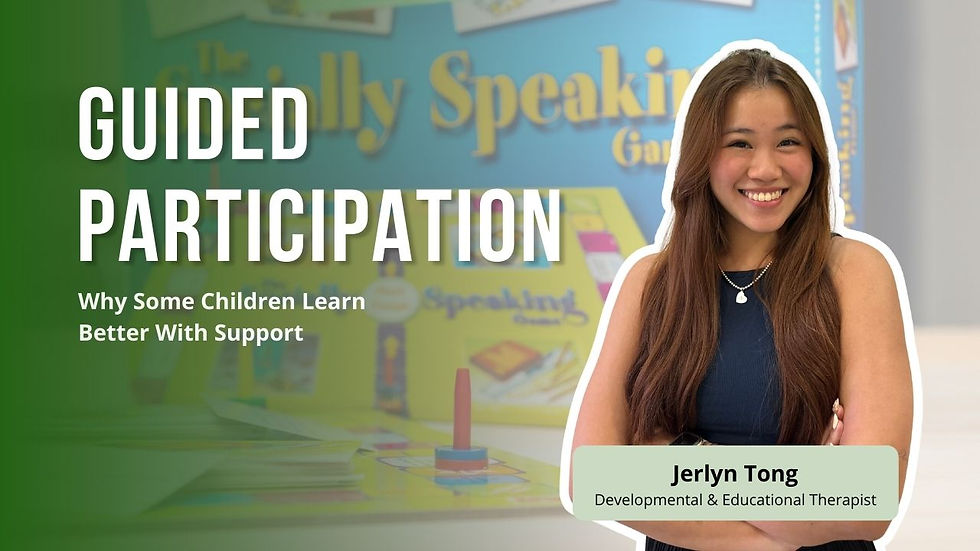
When combined with relationship-based therapy approaches like Guided Participation, SSP supports children not just in learning new skills but also in becoming more confident, connected, and regulated learners. If you would like to learn more about the Safe and Sound Protocol.
About the Writer:
Jerlyn Tong
is a Developmental and Educational Therapist at Total Communication, trained in evidence-based programmes including Lindamood-Bell, the Feuerstein approach, and play-based strategies. With a background in Linguistics and Special Needs Education from NTU, she supports children in building language, thinking skills, and confidence.

Connect with us today to learn more:
Call/Whatsapp: +65 9115 8895
Fill our reachout form: https://www.totalcommunication.com.sg/
Important Links:


Comments