

When a Broken Toy Became a Breakthrough: Dynamic Thinking in Action

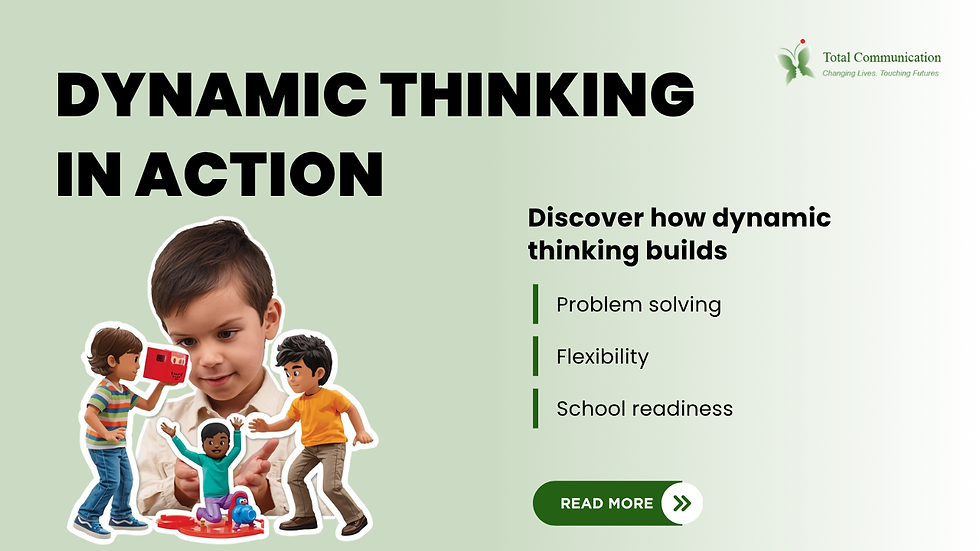
Arjun sat on the floor with his favourite toy truck. One wheel had slipped off. He paused, stared at the wheel, and looked around the room. Instead of freezing or waiting for help, he crawled to the table, grabbed a glue stick, and tried attaching the wheel again. The wheel slipped. He tried again, this time pushing harder. The wheel stayed. His face lit up. He rolled the truck forward with pride.
A small moment for many. A powerful milestone for a child developing dynamic thinking. This single scene reveals how flexible problem-solving grows in real time. It shows how a child moves from observation to action, from trial to adjustment, from effort to achievement.
Let’s unpack what happened step by step.
What Dynamic Thinking Really Means
Dynamic thinking refers to the ability to adapt, explore solutions, and adjust strategies when situations change. It fuels independence, resilience, and learning readiness. Children who develop this skill approach everyday challenges with curiosity and initiative.
In developmental therapy, this skill sits at the centre of learning. Every classroom task, social interaction, and real-world challenge calls for flexible thinking.
Arjun’s moment with the toy truck shows this beautifully.
Step 1: Awareness and Observation
Before any action, Arjun noticed the problem. He looked at the wheel, scanned the environment, and assessed what he saw. This stage builds cognitive awareness and attention control.
Therapists actively nurture this skill by creating structured play experiences that encourage children to notice changes, patterns, and opportunities.
This stage lays the groundwork for thinking that grows and adapts.
Step 2: Idea Generation
Arjun reached for glue. That choice shows idea generation in action. His brain searched for solutions and selected one based on past experiences.
This process reflects executive functioning skills such as memory retrieval and planning. When children practise these skills regularly, their brains form strong pathways for independent problem solving.
Within total communication services, therapists design activities that prompt children to generate multiple solutions through play, storytelling, and guided discovery.
Step 3: Trial and Adjustment
The first attempt did not hold the wheel. Arjun tried again with more pressure. This moment reveals cognitive flexibility and persistence. He adjusted the strategy and continued the task.
This stage builds resilience and adaptability. Children learn that effort leads to progress and that strategies evolve with practice.
Therapy sessions often include structured problem-solving games and real-life scenarios to strengthen this mindset.
Step 4: Success and Confidence Building
The wheel stayed. The truck rolled. Arjun smiled. Success reinforced motivation and confidence.
This emotional reward strengthens neural pathways connected to effort, persistence, and learning. Over time, these experiences shape a child who approaches challenges with enthusiasm and initiative. This stage transforms skills into lifelong habits.
Why Dynamic Thinking Matters Today
Modern classrooms demand flexible thinking. Group projects, problem-based learning, and social communication all require quick adaptation. Children who develop these skills early step into school environments with readiness and confidence.
Every day offers growth opportunities. Early support accelerates progress and strengthens developmental foundations.
This creates a powerful sense of urgency for families who want their children fully prepared for learning and social engagement.
How Developmental Therapy Builds These Skills
Therapists create play-based, evidence-informed sessions that encourage exploration, experimentation, and communication.
Activities include:
Problem-solving play scenarios
Collaborative storytelling
Flexible routine practice
Social interaction challenges
Real-life simulation tasks
These experiences create consistent opportunities for children to practise dynamic thinking in safe and engaging environments.
Through Total Communication services, therapy integrates speech, language, social communication, and cognitive development into a cohesive approach that supports the whole child.
The Bigger Picture
That toy truck moment represents far more than a repaired wheel. It represents a child building the ability to adapt, learn, and thrive in a changing world.
Dynamic thinking shapes classroom readiness, friendships, independence, and future learning success. Every small breakthrough builds momentum for the next. Families who begin early open the door to stronger learning pathways and richer developmental outcomes.
Every challenge holds an opportunity. Every solution builds confidence. Every moment of exploration shapes a brighter learning journey.
A Professional Support:
Call/WhatsApp: +65 9115 88950
Visit our website: www.totalcommunication.com.sg/contact
Important Links:


Comments