

Does My Child Need Speech Therapy, or Will He Catch Up Naturally?


“His cousin barely talked at this age, and now she never stops.”
A parent might hear this at the playground, during a family dinner, or from someone who genuinely means well. You may smile, say, “I hope so,” and then find yourself searching for answers at 2 am. Underneath that question is often guilt, fear of overreacting, comparison anxiety, or the quiet fear that you might realise something too late.
The short answer is
Some children do catch up naturally, but it is not always possible to know which children will without looking more closely at their communication development. An assessment can help you understand what is happening without committing your child to long-term therapy.
How Do I Know If My Child Is Simply a Late Talker?
The phrase “late talker” can make things sound simpler than they are. Some children have a smaller spoken vocabulary while understanding language well, using gestures, engaging socially, and continuing to make steady progress. Others have difficulties that involve understanding language, following instructions, forming sentences, social communication, or speech clarity.
That distinction matters.

For example, a child who understands “Get your shoes and put them by the door,” points to what they want, enjoys interactive play, and steadily adds new words may have a different communication profile from a child who struggles to understand everyday instructions, rarely combines words, or becomes frustrated because communication feels difficult.
Our speech and language therapists look at the whole communication picture rather than counting words alone. Our guide to knowing when your child may need speech therapy can also help you think through the signs you are seeing at home.
What Communication Milestones Should My Child Have Reached?
Milestones are useful reference points, not a pass or fail test. The CDC's 2026 developmental guidance describes milestones as skills that most children, at least 75 percent, can do by a particular age.
At age 2, for example, most children can say at least two words together, such as “more milk,” and use a range of gestures. By age 3, most children can take part in at least two back-and-forth conversational exchanges, ask simple who, what, where, or why questions, and speak clearly enough for others to understand them most of the time.
These milestones become more useful when you look at the pattern over time. Consider speaking with a professional if your child:
Has very few words compared with children of a similar age
Is not combining words when expected for their age
Has difficulty understanding everyday instructions
Relies heavily on pointing, pulling, or other gestures to communicate
Is difficult for familiar or unfamiliar listeners to understand
Struggles to answer questions or take part in simple conversations
Becomes frequently frustrated during communication
Has difficulty joining play or interacting with other children
Has lost communication skills they previously had
Singapore's HealthHub also explains that developmental delay means
reaching developmental milestones more slowly than other children of the same
age, and highlights the value of recognising concerns early.
Could My Child Understand Everything and Still Need Speech Therapy?
Yes. This is one of the most confusing situations for parents. You might think, “He understands everything I say, so how can there be a language problem?” Understanding language is called receptive language. Using words, sentences, and ideas is called expressive language. A child can have stronger receptive language than expressive language. There is also a difference between speech and language.
Speech relates to how your child produces sounds and words. Language involves understanding, expressing ideas, building sentences, answering questions, telling stories, and communicating socially. This is why a child can be bright, curious, affectionate, and highly observant while still benefiting from communication support. If you are wondering about this distinction, our article on speech delay and Developmental Language Disorder explains the differences in more detail.
Am I Worrying Too Much If I Ask for an Assessment?
An assessment does not mean something is seriously wrong. It is simply a way of replacing uncertainty with information. A speech and language assessment may look at how your child understands language, expresses themselves, uses gestures, combines words, produces speech sounds, follows instructions, and communicates during play or conversation. Sometimes the outcome is reassurance and practical strategies for home. Sometimes it identifies an area where targeted therapy could make communication easier. The important thing is that the decision is based on your child's actual profile rather than comparisons with another child.
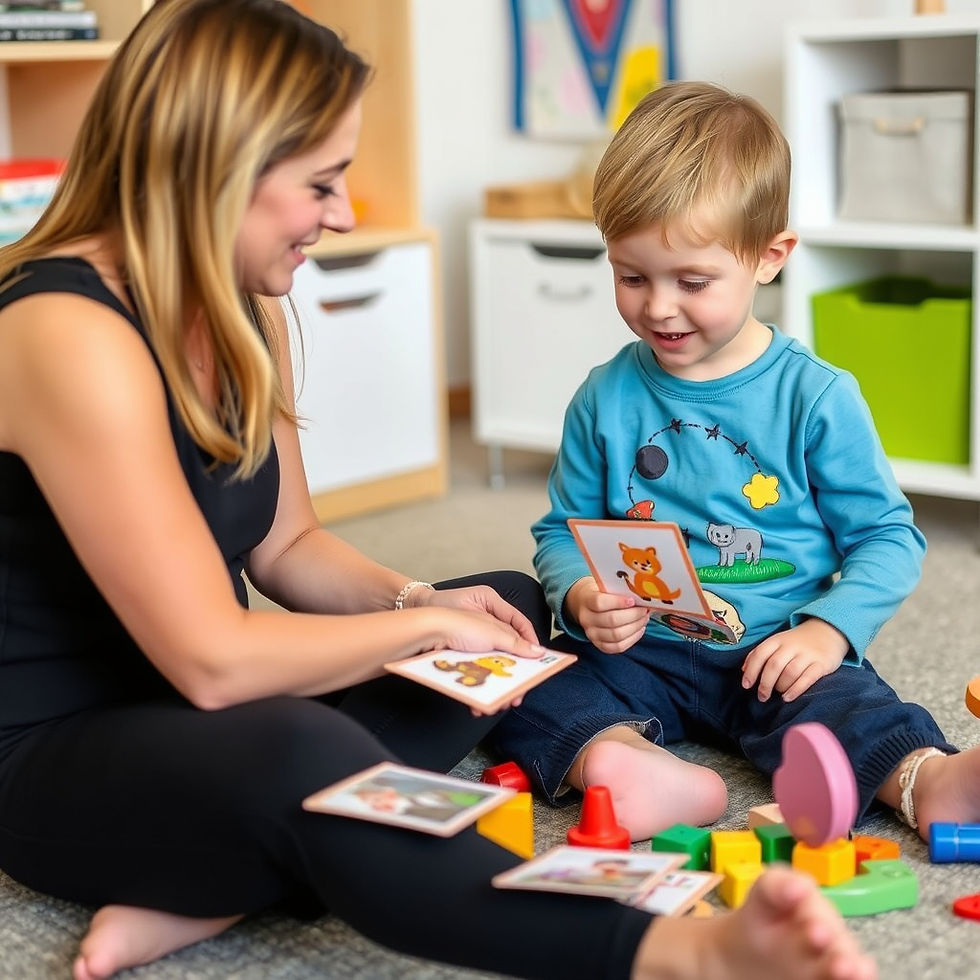
Early support can also be useful because communication affects more than talking. Language is closely connected with learning, relationships, participation, and confidence.
The goal is not to make every child talk at the same pace. The goal is to understand what your child needs to communicate comfortably and effectively.
What Can I Do This Week If I Am Still Unsure?
Start with one simple thing: write down what you are noticing. For the next seven days, record a few examples. What words does your child use spontaneously? What do they understand? Can they follow one-step or two-step instructions? How do they ask for help? How do they respond to questions? What happens when they cannot communicate what they want?
You can also ask your child's teacher what they notice during group activities and play. Then bring those observations to a speech and language therapist if your concerns remain. You do not need to arrive with a diagnosis or a perfect list of milestones. And if your child does catch up naturally, having a clearer understanding of their development can give you something valuable too: reassurance based on information, rather than reassurance based only on hope.
If you are wondering what your child's communication profile means, Total Communication is here to help you make sense of it without judgement or pressure. Our speech and language therapists can talk through your concerns, assess your child's communication needs, and help you decide what the most appropriate next step looks like for your family.
Total Communication Call/WhatsApp: +65 9115 8895 Email: enquiries@totalcommunication.com.sg Address: 1 Pemimpin Drive #11-08, Singapore 576151 Opening hours: Tuesday to Saturday, 9 am to 6 pm Fill our reachout form: Contact Total Communication
Frequently Asked Questions
If my child is a late talker, does that mean they need therapy?
Not necessarily. Some children with primarily expressive language delays make strong progress naturally, while others benefit from targeted support. Looking at understanding, social communication, gestures, and progress over time helps clarify the picture.
Can a child who understands everything still have a language delay?
Yes. Understanding language and expressing language are different skills. A child may understand much more than they can say while still having an expressive language difficulty.
Is three too late to start speech therapy?
No. Children can make meaningful progress at different ages, and support can be helpful whenever a communication difficulty is identified. Earlier assessment can provide useful direction, but there is no single age at which it becomes too late to help.
What happens if I book an assessment and my child does not need therapy?
You may simply receive reassurance and practical strategies to support communication at home. An assessment is about understanding your child's strengths and needs, not automatically starting a therapy programme.


Comments