

Why Does Every Reminder Turn Into an Argument With My Child?


"How many times do I have to tell you? Just finish your homework!"
You hear yourself saying it again. Your child becomes upset, you become frustrated, and something as ordinary as packing a schoolbag turns into a disagreement. Later, you wonder whether you are being too strict or whether your child simply refuses to listen. There is often guilt behind these moments, alongside the fear that you are somehow getting parenting wrong. But what if your child is struggling with something that makes everyday instructions genuinely difficult?
Repeated arguments can sometimes point to challenges with attention, working memory, emotional regulation or executive functioning. These are skills that help children manage everyday responsibilities, and they do not develop at the same pace for everyone.
Understanding what is happening beneath the behaviour can change how you support your child.
Could My Child Be Struggling With Something Beyond Following Instructions?
Imagine asking your child to finish their worksheet, put their books away and prepare their school uniform for the next day. To an adult, these sound like three simple tasks. To a child who struggles with executive functioning, however, each instruction requires several mental processes. They need to remember what you said, understand the order of the tasks, decide where to begin, manage distractions and stay focused until everything is completed.
Executive functioning refers to a group of cognitive skills that help us organise information, control impulses, manage time and work towards goals.
According to Harvard University's Center on the Developing Child, these skills include three important areas:
Working memory: Remembering information and using it while completing a task.
Inhibitory control: Managing impulses, resisting distractions and thinking before acting.
Cognitive flexibility: Adjusting to changes, switching between tasks and approaching problems differently.
These abilities influence how children learn, behave and manage everyday responsibilities.
A child who repeatedly forgets instructions may have difficulty with working memory. A child who becomes upset whenever plans change may struggle with cognitive flexibility. Another child may understand exactly what needs to be done but find it difficult to stop playing and begin their homework. The behaviour may look similar, but the underlying difficulties can be very different.
What Signs Suggest My Child Is Finding Everyday Tasks Difficult?
Every child needs reminders occasionally. However, when the same difficulties appear regularly across home and school, it may be worth understanding what is happening. Here are some patterns parents can look out for.
1. My child needs repeated reminders for simple tasks.
You have explained the same morning routine many times, yet your child still forgets to brush their teeth, pack their water bottle or put on their shoes. This may indicate difficulty with working memory, sequencing or independently following routines.
2. My child struggles to get started with homework.
Even when your child understands the schoolwork, beginning a task can feel overwhelming. They may sit at their desk, sharpen pencils repeatedly, look around the room or find reasons to do something else. Task initiation, an important executive functioning skill, helps children move from knowing what needs to be done to actually starting it.
3. My child becomes frustrated when asked to switch activities.
Moving from television to homework, playtime to bedtime, or one school activity to another can trigger strong reactions. Some children need additional support with transitions and cognitive flexibility. Unexpected changes may feel particularly difficult.

4. My child loses things and struggles to stay organised.
Missing worksheets, misplaced stationery, forgotten instructions and unfinished assignments may be signs of difficulties with organisation and planning.
5. My child reacts emotionally to small requests.
A simple reminder can lead to tears, shouting or withdrawal. Sometimes, children become frustrated because they already feel overwhelmed by the task itself. These signs do not automatically indicate a learning difficulty or developmental condition. What matters is their frequency, intensity and impact on your child's everyday functioning.
Why Does My Child Understand What to Do but Still Struggle to Do It?
This is one of the most confusing experiences for parents. Your child can explain the homework instructions perfectly. They know where their books belong. They understand why they need to get ready on time. Yet, when it comes to doing these things independently, everything becomes difficult. This happens because knowing what to do and being able to organise yourself to do it are two different abilities. For example, a child may understand that homework must be completed before dinner. However, they may struggle to:
Remember all the questions they need to complete.
Decide which question to attempt first.
Estimate how much time the work will take.
Ignore distractions around them.
Recognise when they are stuck and ask for help.
Check their work before finishing.
These challenges can become more noticeable as school expectations increase and children are expected to manage more responsibilities independently. Sometimes, difficulties with attention, language processing, reading or understanding instructions can also contribute to these experiences. This is why it helps to look beyond the argument itself and understand which skills your child may need support with. You can also explore our guide to the signs that may indicate a child needs educational therapy to understand when additional learning support may be helpful.
Can Educational Therapy Help My Child Become More Independent?
Yes. When everyday struggles are connected to learning and cognitive skills, targeted support can help children develop strategies to manage these demands more confidently. Educational Therapy in Singapore can provide structured support for children experiencing difficulties with learning, organisation, attention and independent task management. At Total Communication, our educational therapists look at the underlying skills affecting how a child learns and approaches everyday academic tasks. Depending on your child's needs, support may focus on:
Building working memory: Helping children retain instructions, remember information and follow multiple steps more effectively.
Strengthening attention and focus: Developing strategies that help children stay engaged with activities and manage distractions.
Developing planning and organisation: Teaching children how to break larger assignments into smaller, manageable steps, organise their materials and manage their time.
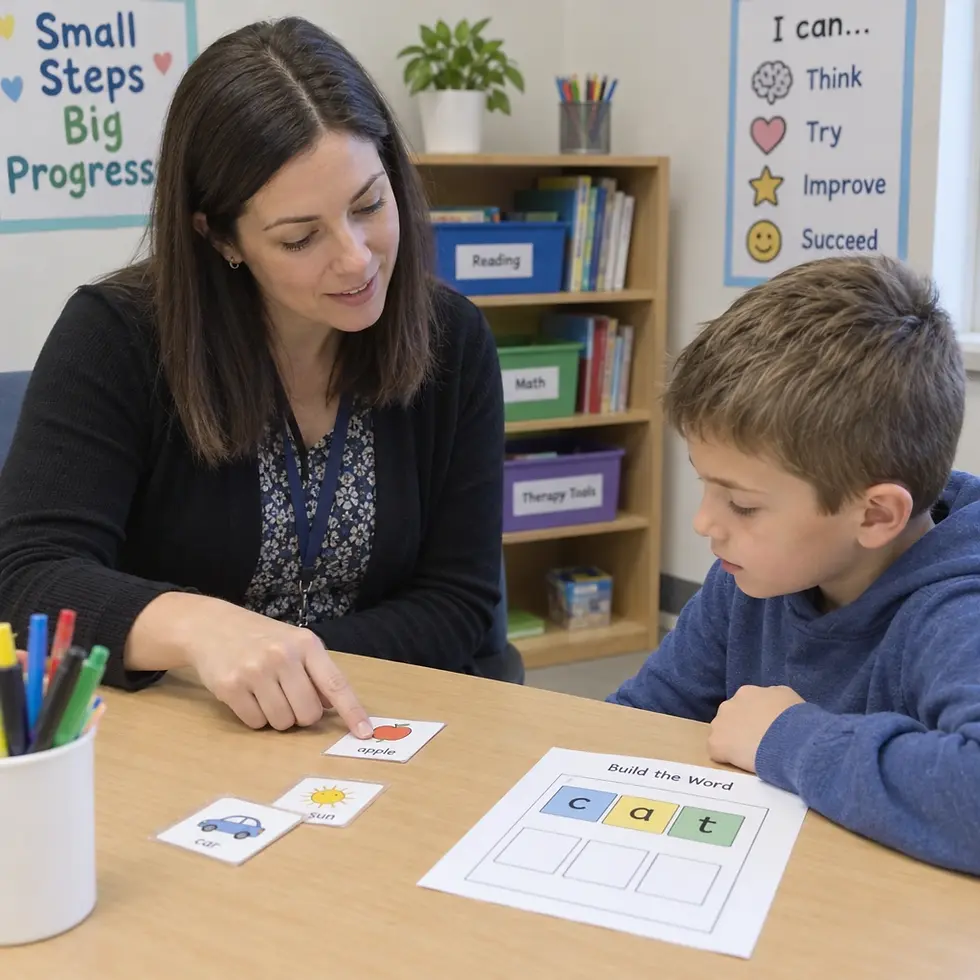
Improving problem-solving: Helping children approach difficult tasks, consider different solutions and work through challenges with greater confidence.
Supporting emotional regulation: Helping children recognise frustration, manage their responses and develop more constructive ways to approach challenging situations.
Educational support should be based on the child's individual learning profile rather than assuming every child needs the same intervention.
Did I Cause These Difficulties, and Can My Child Improve?
When every conversation seems to involve another reminder, it is natural to question your parenting. Perhaps you wonder whether you have been too demanding, too accommodating or not consistent enough. But difficulties with executive functioning are not simply the result of poor parenting or a lack of discipline. These skills develop gradually and are influenced by a combination of developmental, individual and environmental factors. The encouraging part is that children can continue developing these skills through appropriate experiences, guidance and practice. Progress may look different for every child. One child might begin completing morning routines with fewer reminders. Another might learn to break homework into smaller tasks. A child who previously became overwhelmed by changes may gradually become more comfortable with transitions.
The goal is not to make children independent overnight. It is to give them the strategies and support they need to become more confident over time. At Total Communication, our speech and language therapists and educational therapists work with children and families to understand individual developmental and learning needs, providing support that considers the whole child. If you recognise these patterns in your child, start by observing which everyday tasks cause the most difficulty this week. Write down what happens before the frustration begins, what your child finds difficult and what helps them complete the task.
That small observation can be a useful starting point for a conversation with a professional.
You do not have to turn every reminder into a battle. Sometimes, the most meaningful change begins when we understand what our child is finding difficult.
If you would like to understand your child's learning needs better, Total Communication is here to help you take the next step.
Call us: +65 9115 8895
WhatsApp us: wa.me/+6591158895
Frequently Asked Questions
Why does my child get angry when I remind them to do homework?
Your child may already feel overwhelmed by the task, particularly if they struggle with attention, planning or working memory. Repeated reminders can increase frustration when they are unsure how to get started. For personalised guidance, contact Total Communication at +65 9115 8895.
Is difficulty following instructions a sign of ADHD?
It can be one possible sign, as children with ADHD may experience difficulties with attention, organisation and impulse control. However, similar behaviours can have other explanations, so a proper assessment is needed before drawing conclusions. You can contact Total Communication at +65 9115 8895 to discuss your concerns.
How can I stop homework from becoming a daily argument?
Try breaking homework into smaller tasks, giving one instruction at a time and using a simple visual checklist. Predictable routines and short breaks can also help children manage their workload. For further support, speak with Total Communication at +65 9115 8895.
At what age should my child be able to manage homework independently?
There is no single age at which every child becomes fully independent with homework. Expectations should develop gradually according to the child's age, learning abilities and individual support needs. Contact Total Communication at +65 9115 8895 if you would like to understand what support may be appropriate for your child.


Comments