

Could Child Speech Delay Singapore Explain Why My Child Barely Speaks Outside?


“She's so chatty at home. Why doesn't she ever talk here?”
A teacher says it gently after school. At the playground, your child whispers to you but says nothing to another child. Then a relative asks, “But he talks so much at home, right?”
You may feel guilt, fear of overreacting, or comparison anxiety. You may also wonder whether you should have noticed something earlier.
Yes, it is worth paying attention to this difference, but it does not automatically mean your child has a speech delay. A child who talks comfortably at home but becomes very quiet outside may be experiencing differences in confidence, language demands, social communication, anxiety, or speech and language development. Our speech and language therapists look at the whole communication picture, not just how many words a child says in one setting.
Why Does My Child Talk So Much at Home but So Little Outside?
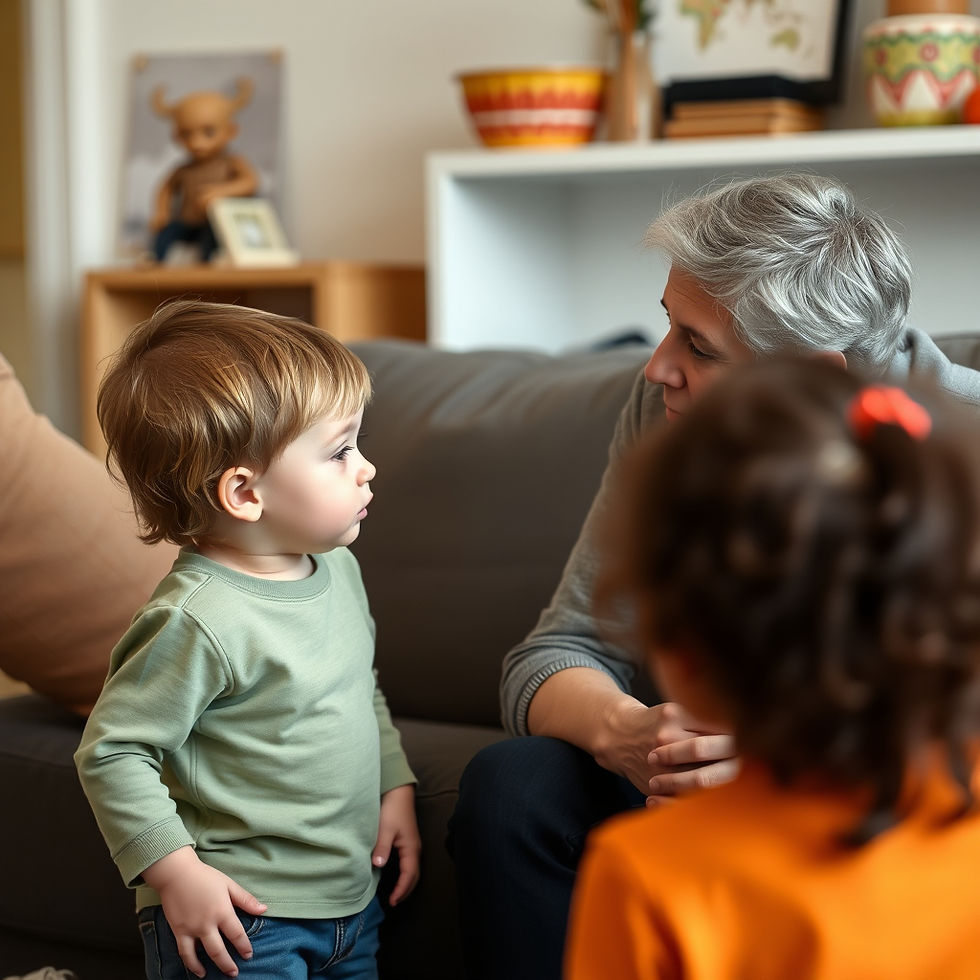
Home is often the easiest communication environment for a child. The people are familiar, routines are predictable, and your child knows that you understand what they mean, even when their words are incomplete. Outside the home, the communication demands can change quickly. Your child may need to:
Understand unfamiliar accents, questions, or instructions.
Find the right words quickly.
Speak loudly enough for someone else to hear.
Take turns in a conversation.
Respond when another child approaches.
Manage background noise and multiple conversations.
Use language with someone they do not yet feel comfortable with.
Cope with the pressure of being expected to answer.
For some children, the issue is not that they cannot communicate. The issue is that the situation makes communication much harder. This distinction matters when considering Child Speech Delay Singapore concerns because speech and language skills are not measured by vocabulary alone. A therapist also considers comprehension, sentence formation, speech clarity, social communication, and how consistently a child can use these skills across everyday settings.
Our guide to speech and language therapy in Singapore can help you understand the difference between speech, language, and communication difficulties.
What Signs Suggest My Child May Need More Than Time to Warm Up?
Some children simply need time. Being cautious with unfamiliar people, observing before joining in, or speaking less in busy environments can be part of an individual temperament. It becomes more useful to seek professional guidance when the pattern is persistent or is affecting your child's ability to participate. You might notice that your child:
Rarely speaks to teachers even after becoming familiar with them.
Uses gestures or points when they could otherwise use words.
Becomes distressed when asked to answer aloud.
Speaks to one familiar person but not to others.
Has difficulty communicating basic needs outside the home.
Struggles to join conversations or play with other children.
Understands what is being said but seems unable to respond verbally.
Also has difficulty understanding or expressing language at home.
Is difficult for unfamiliar listeners to understand, even though you understand them easily.
Age matters too. The CDC's 2026 developmental milestones state that by age 3, most children can have at least two back-and-forth exchanges in conversation, ask simple “who,” “what,” “where,” or “why” questions, and talk well enough for others to understand them most of the time. These milestones describe what most children can do, not a diagnosis for an individual child.
A child who is quiet outside but otherwise communicates comfortably may need a different kind of support from a child whose language skills are limited everywhere.
Our article on language difference versus language disorder explains why context and consistency matter when deciding whether a child needs intervention.
Could My Child Be Anxious About Speaking Instead of Having a Speech Delay?
Sometimes the biggest clue is the difference between what a child can do and what they can access in a particular situation. Selective mutism is one example. It involves a consistent difficulty speaking in specific social situations despite being able to speak in others. According to the American Speech-Language-Hearing Association, drawing on DSM-5-TR criteria from 2022, the pattern needs to persist for at least one month and interfere with social or educational functioning. That does not mean a quiet child has selective mutism.
A child may simply be shy, cautious, overwhelmed by noise, unfamiliar with the language being used, or still developing confidence in social communication. A speech and language therapist can help separate these possibilities.

This is particularly important in Singapore, where a child may use different languages with different people. A child who speaks Mandarin confidently with grandparents but rarely speaks English at school may be dealing with language exposure, confidence, communication demands, or something else entirely. If your family uses more than one language, our guide to bilingual language development can help put those differences into perspective.
Did I Cause My Child to Be This Way, and Can This Actually Improve?
This is often the question underneath the question. Did I speak for my child too much? Did I correct them too often? Did I make them anxious? Should I have pushed them to talk more?
In most cases, there is no single parenting decision that explains a child's communication pattern. Speech, language, temperament, social communication, anxiety, hearing, learning, and developmental factors can all interact.
And yes, communication can improve. The goal is not to force a child to perform verbally in unfamiliar situations. Good support begins by understanding where communication feels comfortable and where it becomes difficult. From there, a therapist may gradually build skills and confidence across people, places, and activities. An assessment can also be reassuring when the findings show that your child's communication is developing appropriately and that they mainly need time, confidence, or specific strategies. The important thing is to understand what is happening rather than spending months guessing.
What Can I Do This Week If My Child Talks at Home but Not Outside?
Start by keeping a simple communication diary for one week. Write down three things:
Who your child talks to.
Where your child talks and where they become quiet.
What communication looks like in each setting, including speech, gestures, pointing, facial expressions, and responses.
If possible, record a short video of your child's natural communication at home. A therapist can use this alongside your observations and information from teachers to understand the difference between environments. Then share what you have noticed with your child's teacher or a qualified speech and language therapist. You do not need to arrive with a diagnosis. You only need to say, “My child communicates differently at home and outside, and I would like to understand why.”
That is a reasonable question. It is also a good place to start. If you would like help understanding your child's communication pattern, our team can talk through what you are seeing and whether a speech and language assessment would be useful.
Total Communication Call/WhatsApp: +65 9115 8895 Email: enquiries@totalcommunication.com.sg Address: 1 Pemimpin Drive #11-08, Singapore 576151 Opening hours: Tuesday to Saturday, 9 am to 6 pm Fill our reachout form: Contact Total Communication Frequently Asked Questions
Why does my child talk to me but not their teacher?
Your child may feel more comfortable communicating with familiar people and may need more time to use their skills with teachers. If the pattern continues after your child has had time to settle in, it is worth discussing with the teacher and a speech and language therapist.
Is being shy the same as having a speech delay?
No. Shyness can affect how readily a child speaks, while a speech or language difficulty affects communication skills themselves. An assessment looks at both what your child can do and how consistently they can use those skills.
Should I ask my child's preschool about their talking?
Yes. Teachers can provide valuable information because they see your child interacting with peers and adults in a different environment. Ask what your child does when requesting, answering questions, joining play, and communicating needs.
Can a child grow out of being very quiet outside?
Some children become more comfortable naturally as confidence and familiarity grow. If limited speaking persists, causes distress, or affects friendships and learning, getting professional guidance can help clarify what your child needs.


Comments